

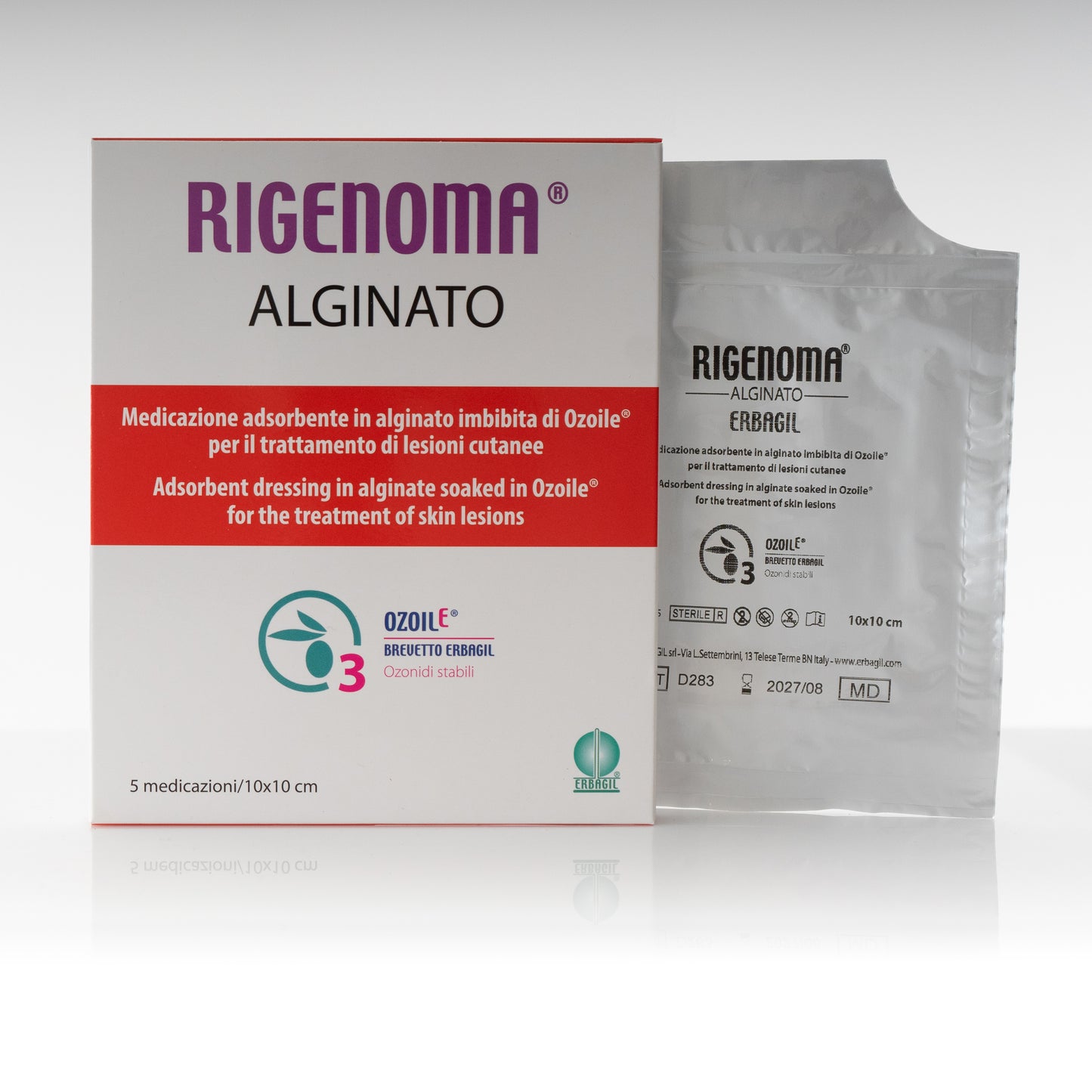

Rigenoma Alginate





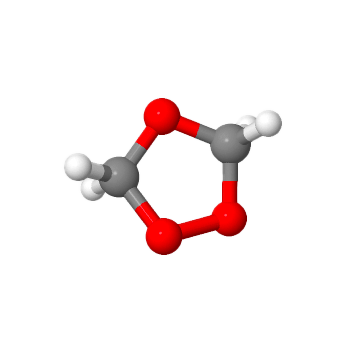











Advanced dressing for acute and chronic wounds of different etiologies, from moderately to highly exuding, superficial and cavitary
Rigenoma® Alginate is an advanced bioactive dressing composed of Ozoile® and natural calcium alginate fibers. Indicated for the management of moderately to highly exuding wounds, such as pressure ulcers (decubitus ulcers), vascular ulcers (venous, arterial, and mixed), diabetic foot ulcers, post-traumatic and post-surgical wounds, oncological and post-radiotherapy wounds, superficial and deep burns, as well as infected wounds under medical supervision , this product offers excellent exudate management and supports tissue regeneration. Its ability to form a gel upon contact with exudate ensures optimal hydration of the wound, preventing dryness and promoting an environment conducive to healing. Removal is painless, preventing trauma to healing tissue. It can be cut and shaped to fit wounds of any shape and size.
Validated by clinical evaluations
More than the drug, without the drug.


Mechanism of Action
Rigenoma® Alginate with Ozoile® acts on cellular redox balance, triggering a cascade of antimicrobial, anti-inflammatory, antipruritic, and tissue-regenerating effects. Calcium alginate, upon contact with wound exudate, forms a bioactive gel that maintains optimal wound hydration, promoting cell proliferation and the formation of granulation tissue.
How to use
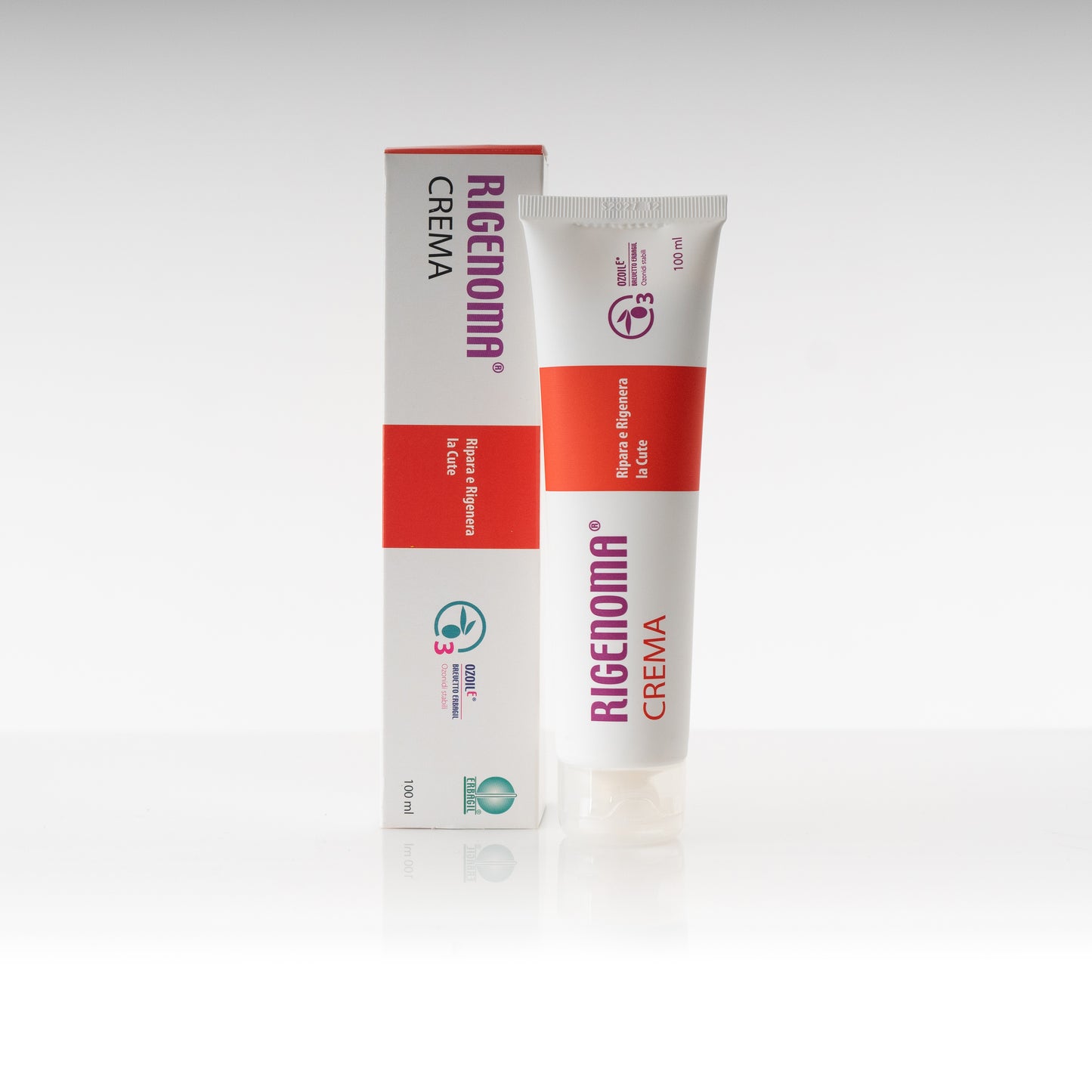
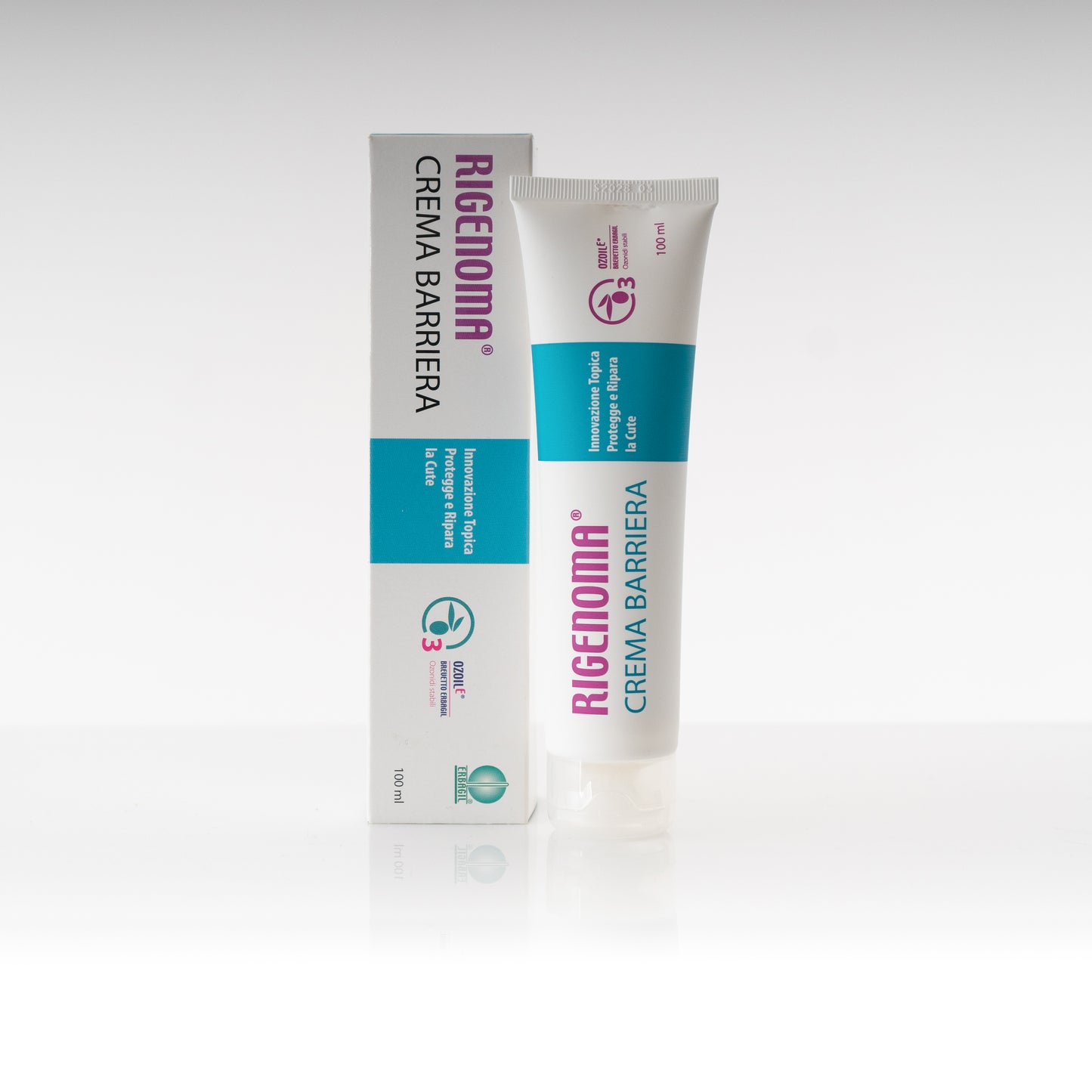
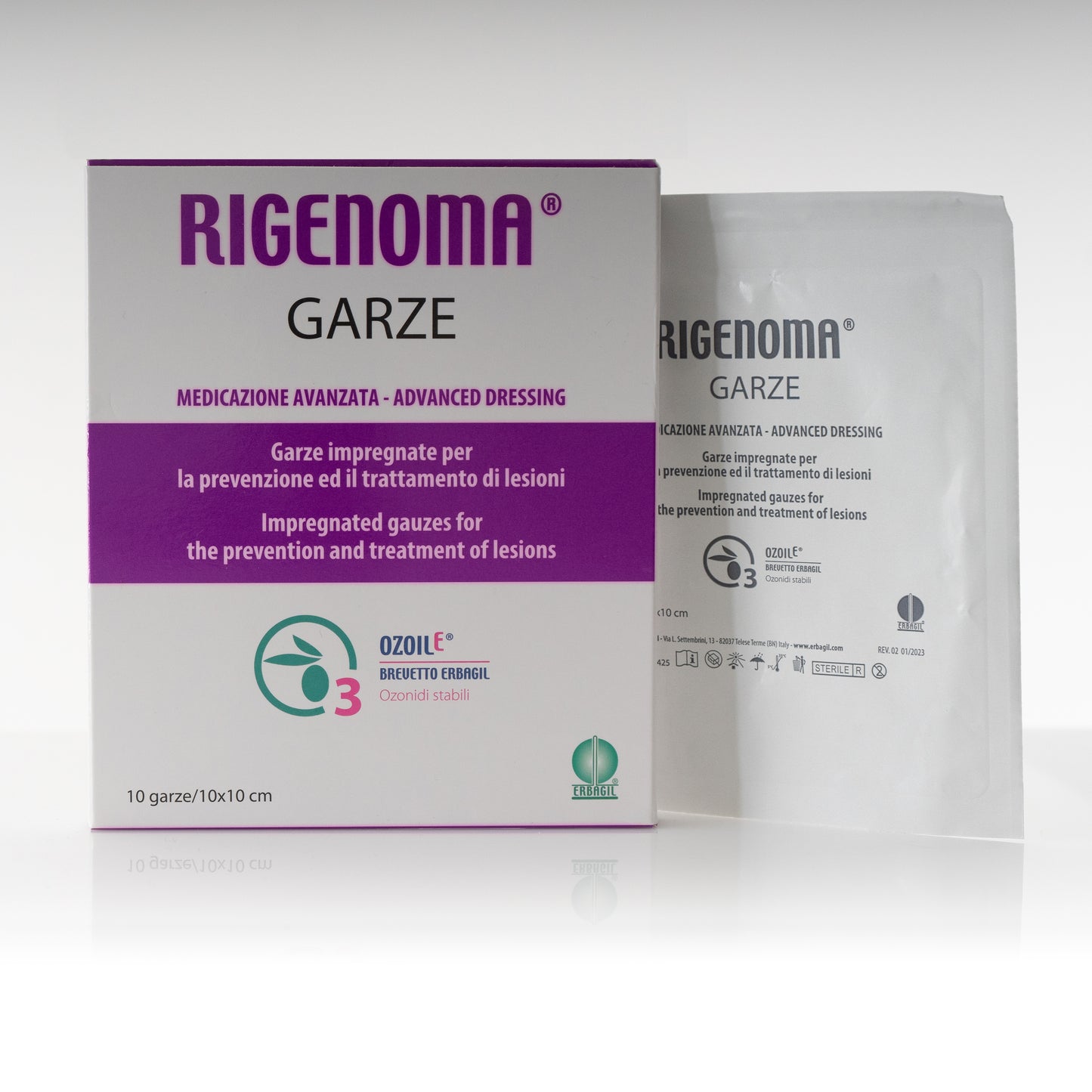
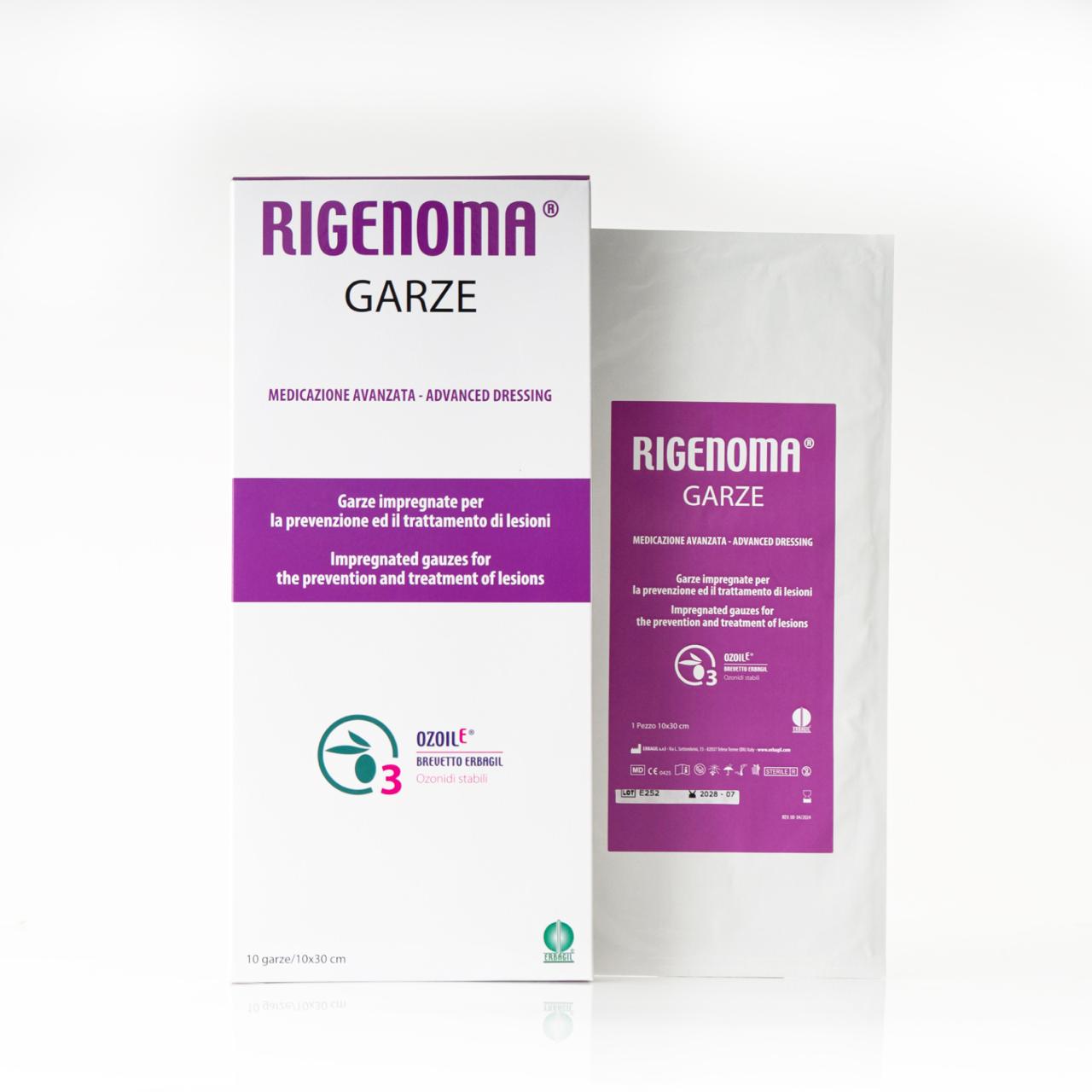
After cleansing the wound with Rigenoma® no-rinse cleanser and protecting the periwound skin with an even layer of Rigenoma® cream, fill the cavity with Rigenoma® Alginate without forced packing. Renew the dressing two to three times a week depending on the wound's exudation. Cover with Rigenoma® gauze in at least a double layer, folded or tiled, to create a semi-occlusion. If the wound is also necrotic, after cleansing and before packing with Rigenoma® Alginate, cover the entire base of the wound with a generous layer of Rigenoma® hydrogel.
Mechanism of Action
Rigenoma® Alginate with Ozoile® acts on cellular redox balance, triggering a cascade of antimicrobial, anti-inflammatory, antipruritic, and tissue-regenerating effects. Calcium alginate, upon contact with wound exudate, forms a bioactive gel that maintains optimal wound hydration, promoting cell proliferation and the formation of granulation tissue.
How to use
After cleansing the wound with Rigenoma® no-rinse cleanser and protecting the periwound skin with an even layer of Rigenoma® cream, fill the cavity with Rigenoma® Alginate without forced packing. Renew the dressing two to three times a week depending on the wound's exudation. Cover with Rigenoma® gauze in at least a double layer, folded or tiled, to create a semi-occlusion. If the wound is also necrotic, after cleansing and before packing with Rigenoma® Alginate, cover the entire base of the wound with a generous layer of Rigenoma® hydrogel.


Calcium Alginate, Ozoile® (Stable Ozonides).
Calcium Alginate, Ozoile® (Stable Ozonides).


The purchase of our products is governed by clear and transparent terms, compliant with the Consumer Code and the GDPR. All prices include VAT, with fast shipping via GLS courier. Orders are accompanied by a guarantee of conformity and right of withdrawal within 14 days.
For more details on payments, deliveries and return policies, please see the dedicated section on our official website. We are always available for support and assistance at the contacts indicated.
The purchase of our products is governed by clear and transparent terms, compliant with the Consumer Code and the GDPR. All prices include VAT, with fast shipping via GLS courier. Orders are accompanied by a guarantee of conformity and right of withdrawal within 14 days.
For more details on payments, deliveries and return policies, please see the dedicated section on our official website. We are always available for support and assistance at the contacts indicated.


Rigenoma Alginate
Advanced dressing for acute and chronic wounds of different etiologies, from moderately to highly exuding, superficial and cavitary
Rigenoma® Alginate is an advanced bioactive dressing composed of Ozoile® and natural calcium alginate fibers. Indicated for the management of moderately to highly exuding wounds, such as pressure ulcers (decubitus ulcers), vascular ulcers (venous, arterial, and mixed), diabetic foot ulcers, post-traumatic and post-surgical wounds, oncological and post-radiotherapy wounds, superficial and deep burns, as well as infected wounds under medical supervision , this product offers excellent exudate management and supports tissue regeneration. Its ability to form a gel upon contact with exudate ensures optimal hydration of the wound, preventing dryness and promoting an environment conducive to healing. Removal is painless, preventing trauma to healing tissue. It can be cut and shaped to fit wounds of any shape and size.
Validated by clinical evaluations
More than the drug, without the drug.
Mechanism of Action
Rigenoma® Alginate with Ozoile® acts on cellular redox balance, triggering a cascade of antimicrobial, anti-inflammatory, antipruritic, and tissue-regenerating effects. Calcium alginate, upon contact with wound exudate, forms a bioactive gel that maintains optimal wound hydration, promoting cell proliferation and the formation of granulation tissue.
How to use
After cleansing the wound with Rigenoma® no-rinse cleanser and protecting the periwound skin with an even layer of Rigenoma® cream, fill the cavity with Rigenoma® Alginate without forced packing. Renew the dressing two to three times a week depending on the wound's exudation. Cover with Rigenoma® gauze in at least a double layer, folded or tiled, to create a semi-occlusion. If the wound is also necrotic, after cleansing and before packing with Rigenoma® Alginate, cover the entire base of the wound with a generous layer of Rigenoma® hydrogel.
Mechanism of Action
Rigenoma® Alginate with Ozoile® acts on cellular redox balance, triggering a cascade of antimicrobial, anti-inflammatory, antipruritic, and tissue-regenerating effects. Calcium alginate, upon contact with wound exudate, forms a bioactive gel that maintains optimal wound hydration, promoting cell proliferation and the formation of granulation tissue.
How to use
After cleansing the wound with Rigenoma® no-rinse cleanser and protecting the periwound skin with an even layer of Rigenoma® cream, fill the cavity with Rigenoma® Alginate without forced packing. Renew the dressing two to three times a week depending on the wound's exudation. Cover with Rigenoma® gauze in at least a double layer, folded or tiled, to create a semi-occlusion. If the wound is also necrotic, after cleansing and before packing with Rigenoma® Alginate, cover the entire base of the wound with a generous layer of Rigenoma® hydrogel.
Calcium Alginate, Ozoile® (Stable Ozonides).
Calcium Alginate, Ozoile® (Stable Ozonides).
The purchase of our products is governed by clear and transparent terms, compliant with the Consumer Code and the GDPR. All prices include VAT, with fast shipping via GLS courier. Orders are accompanied by a guarantee of conformity and right of withdrawal within 14 days.
For more details on payments, deliveries and return policies, please see the dedicated section on our official website. We are always available for support and assistance at the contacts indicated.
The purchase of our products is governed by clear and transparent terms, compliant with the Consumer Code and the GDPR. All prices include VAT, with fast shipping via GLS courier. Orders are accompanied by a guarantee of conformity and right of withdrawal within 14 days.
For more details on payments, deliveries and return policies, please see the dedicated section on our official website. We are always available for support and assistance at the contacts indicated.









FAQ
Rigenoma® Alginate is indicated for acute and chronic lesions
characterized by moderate or high exudation, such as ulcers, wounds
surgical wounds, pressure sores and burns. Not recommended for wounds
dry or poorly exuding, as it may not adhere properly.
Rigenoma® Alginate is indicated for acute and chronic lesions
characterized by moderate or high exudation, such as ulcers, wounds
surgical wounds, pressure sores and burns. Not recommended for wounds
dry or poorly exuding, as it may not adhere properly.




